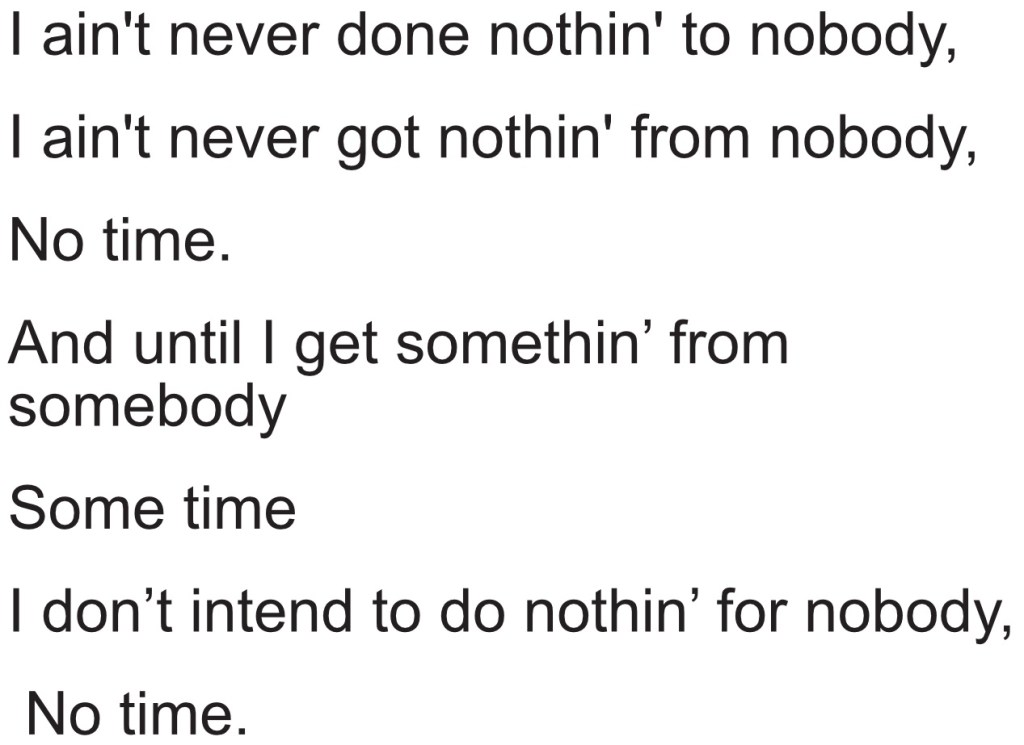
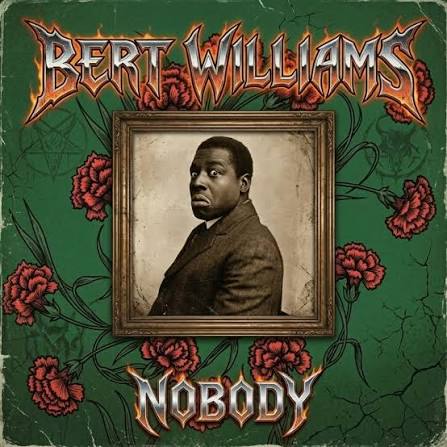
Words to the chorus of “Nobody” by Bert Williams
* * *
In Search of Identity
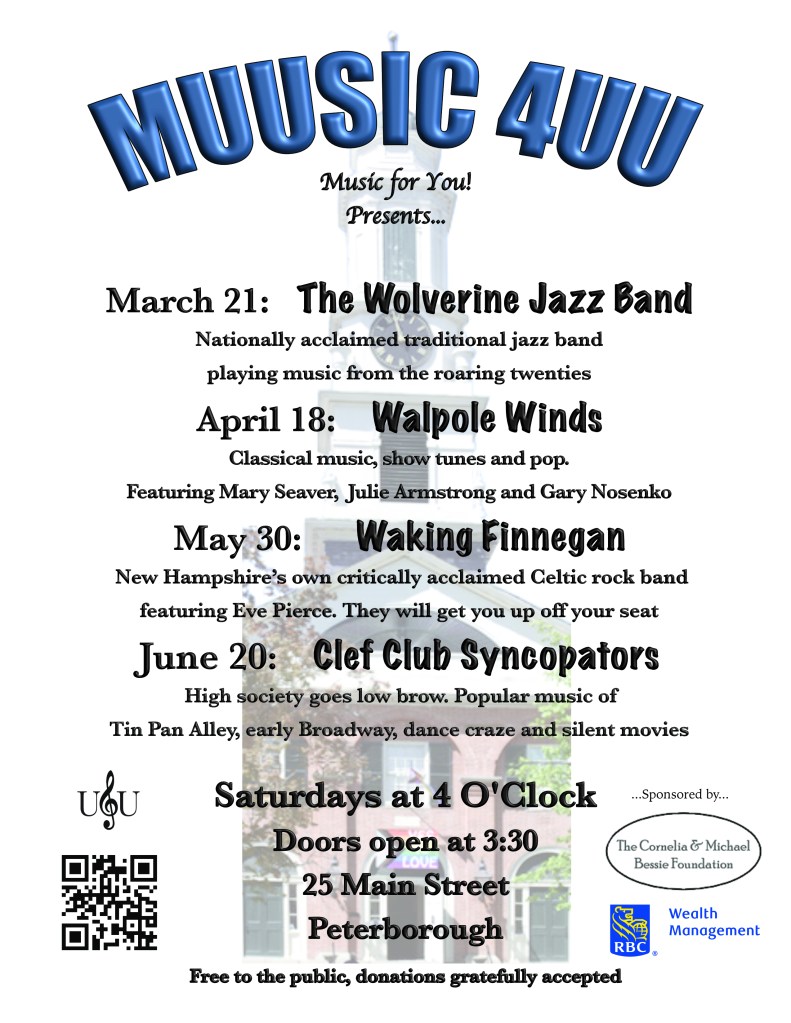
This blog feels a little odd to me, not just because I’m part of the band listed above, but because I am having some difficulty with the concept of interviewing myself. Clef Club Syncopators is a part of my musical history – emphasis on history – that dates back to my Conservatory days, full of the heady thrill of playing music I was in love with. And that music was all about the first three decades of the 20th century.
Clef Club Syncopators was at that time a strictly reading band – no improvisation – playing from stock arrangements culled from a large collection of music given to me by local Boston bassist, Steve Pratt. Clef Club was the band that I ran counter to two other bands: Happy Feet Dance Orchestra and Charles Street Jazz Band. The former was my main gig – partly reading/ partly improvised that performed a specific repertoire made up of music from the early books of Duke Ellington, Don Redman, Fletcher Henderson, plus a bunch of stocks that we “opened” up. I transcribed much of our book off recordings on tape from old 78 rpm records; later I began to write original arrangements but always preferred the transcriptions because of their historical accuracy. Charles Street was just a plain old Trad. Jazz band, all improv.
But Clef Club Syncopators filled a difference niche. This music was earlier than the other two bands by a decade or two, although there was overlap. The purpose was to provide dance music for dance hobbyists who were into the multitude of dance styles from those first two decades. And so we played for them in Newport, in Concord, in Boston, but we never really performed as a band for entertainment purposes.
I named the band after what I thought at the time was a New York nightclub that provided music for dancers Irene and Vernon Castle with their house arranger Ford Dabney and his cohort of composers that included James Reese Europe. Later I realized that I had conflated the activities of the icons of the Dance Craze that started around 1907 with the organization that Ford Dabney had started: the Clef Club. The two are separate but deeply intertwined.
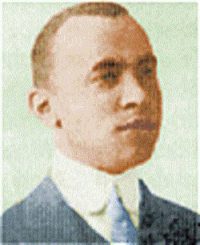
Ford Dabney was a ragtime pianist who never attained the recognition given Scott Joplin, but nevertheless was a vital figure in the development of the music scene in New York City in the 1910’s. Together with fellow ragtime composer James Reese Europe, they worked to create musical opportunities for local black musicians and fostered a group to better the lives and working conditions for them. To this end they formed a club – sort of a union – that also had an orchestra associated with it. This was Clef Club, a club, a union, a band – all things musical for black residents of New York. Here is their mission statement:
We, the members of said organization, have established, organized, and incorporated the Clef Club of the City of New York, in order to inculcate the science of vocal and instrumental music, technique, and execution of vocal and instrumental music, and to promote good fellowship and social intercourse.
The original Clef Club organization and orchestra flourished, and with it Dabney’s fortunes. He collaborated with Vernon Castle in developing tunes that best supported the fluid athleticism of the Castles’ dance demonstrations. He also composed a number of tunes that became standards, such as Shine, and for a short time he owned a theatre in Washington DC. But consider this: Dabney’s contribution to music arts in New York was not just enormously significant to the African American community but to the development of American popular culture at large. And this happened ten years before the Harlem Renaissance.
* * *
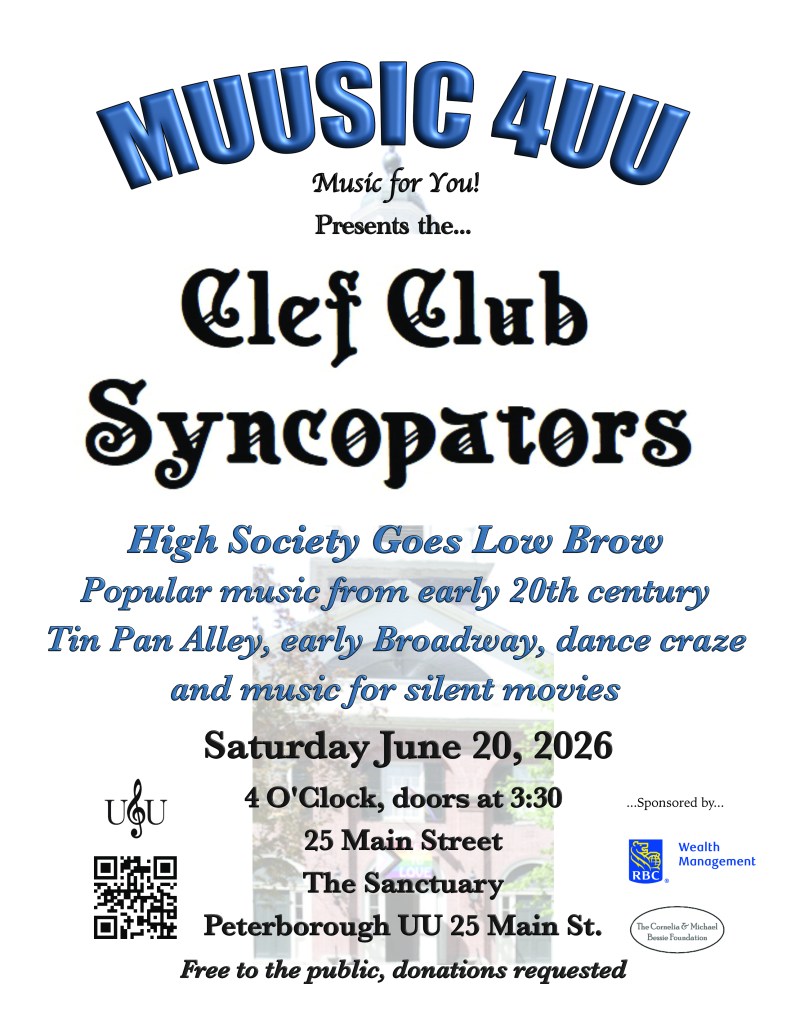
The new Clef Club Syncopators, which retired in 2000 and was reborn this year is reflective of that mission from a dim mirror to the past. We play the music of the time, but no longer just for dancers in period costume. We’re actually paying it backwards to the culture of the time, the optimism, the joy and enthusiasm along with all the hokey theatrics and overacting. So while our music is homage to the tremendous significance of the African American influence on popular culture, it also takes a broad swipe across the culture of the day and what it means to us now.
Along with a shout out to the composer/arranger team of Dabney and Europe in Castle House Rag, we also have a heavily mannered ballet theme by Cecile Chaminade, the French composer who had the sense to publish on Tin Pan Alley. We have George Gershwin’s piece Rialto Ripples which he co-wrote with Alley compatriot Will Donaldson. Gershwin was boy of 19 and a plugger on the Alley at the time. We give a hearty wave to Bert Williams, the first African American comedian who influenced all comedians going forward and who re-recorded his hit Nobody at least six times because it was, well, successful. And we would be remiss if we didn’t include music from the greatest entertainment technology of the time: silent movie music by Julian Andino, another composer of Afro-Cuban birth living in New York at the time.
Those tunes, plus a few peppy numbers of the times and a Grand Waltz make a cross-section of what people listened to at the time. And it was all either in a club or at home. Radio didn’t exist yet, and recorded music was still pretty much reserved for people who afford the devices. Our job is to give our best reinterpretation of the sounds of the times. We hope it brings something positive to you listeners as well.
Here’s my interview with myself:
Interviewer: What would you say was the greatest influence on the development of your musical tastes.
Lucinda: So many tunes, so little time.
* * *
Making Music: Generational Positivism
How do we musicians do what we do? Not speaking of making music, but of making a living doing music (or not). For those fans of good music whose experience and knowledge of this craft is limited to opening up their Spotify setlist, or even more arcane, tuning to your favorite FM station, learning how such a career is built is eye-opening.
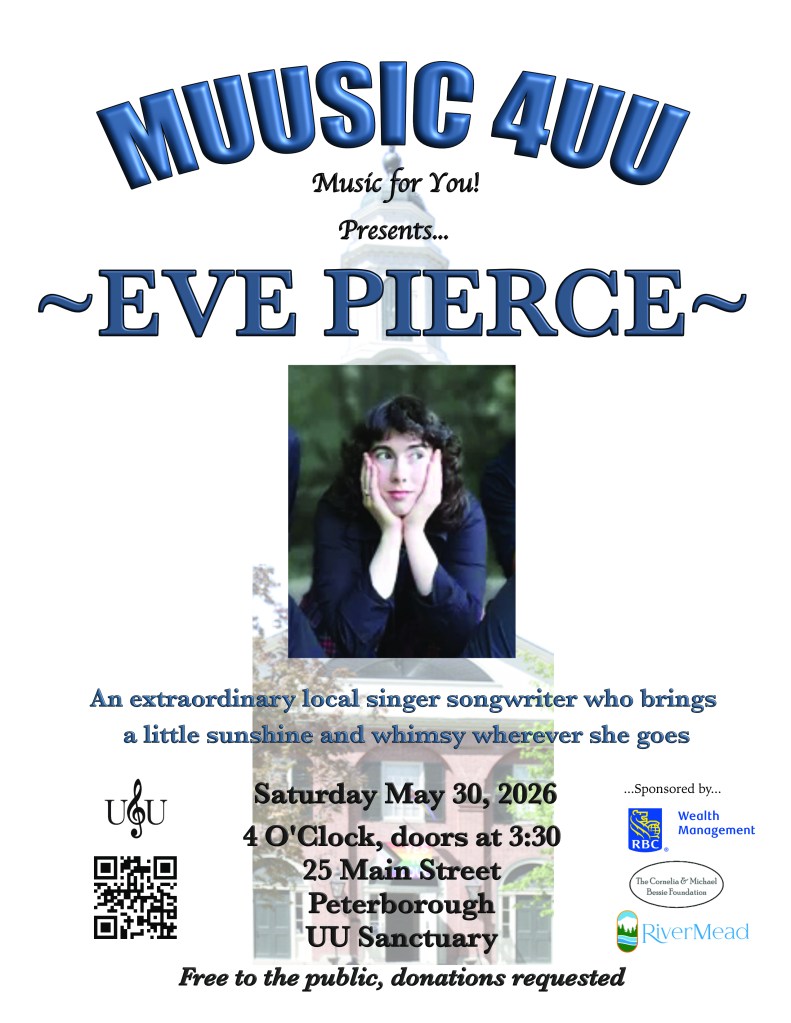
For those of us who enjoy the re-creation of music written before us rather than create our own, as is the specialty of singer-songwriter Eve Pierce, we often reflect on the lives of past musicians; how they lived, how they got by, how they made themselves known. Careers have a trajectory, and as I considered my own while preparing to write this blog, I wondered if youngsters today are having a different experience: do Gen Z musicians have a different path from us Boomers?
They don’t. Not really. We made cold calls. She writes cold emails.
Eve Pierce is the local girl made good. Uncertain whether it is good enough for her, she didn’t say. But she is so very young and has so very much going for her so her success is already evident and in her hands. She could probably make a living bottling and selling that wonderful enthusiasm, but lucky for us she has better things to do.
Where this all starts is, er, in utero. (Yes, music does cross the placenta. I know this for a fact.) Coming from a musical family and a mother who sings, Eve decided to be a songwriter early on – elementary school she tells me – but decided she wasn’t any good at it, later changing her mind before she graduated high school. How nice it is to discover yourself wrong!
In this country we are now going on 125 years of history of songwriting; the singer-songwriter phenomenon began mostly in the 1960’s with some precedent from the folk music revival in the late 1950’s. That’s a half century of evolution of what is now a well-established art form. What is interesting in Eve’s background is the diversity of her sources, a statement that bears some explanation. Singer-songwriting is such a general topic; the diversity of styles, approaches and ethnicities is a gigantic contribution to the genre such that Eve’s choices are notable, those being The Beatles, Paul Simon, the Mountain Goats and Neko Case.
Let’s unpack this. Skipping over the Beatles, because you know, they’re the Beatles (you can’t say a small amount about them and avoid not saying enough), Paul Simon was best as a balladeer with an ironic twist to his humor. The Mountain Goats are straight-ahead three-chord punk with themes tending toward the darker side. But Neko Case is an odd duck. Briefly, (other than the fact that I had never heard of her and so needed to do some research) Case is from Ukranian roots, has spent most of her time in Tacoma, Washington and Vancouver BC, and her music comes from a wildly broad set of sources including punk, indie, honky-tonk, rockabilly, and country.
How does this get back to Eve Pierce? Well, I was particularly taken with one of her songs: Gargoyles.
What are gargoyles my love and why do they watch me so with cold stone eyes my love they watch us here below….
Who are you now, what does that make of me? Only a fool thinking you’d wait for me. What are we now my love and why do you watch me so. You sit above and I fall below.
I’ve always been falling I see no reason to stop now. Let yourself go! Forget that I’m stone! Throw your chisel out the window, let me be known! Unwitting Pygmalion; inhuman Van Gogh
You sculpted my visage from violence and snow. I am your masterpiece, your folly in art. So why does it feel like I’m falling apart?
What are gargoyles my love and why do they watch me….
I’ve always been falling I see no reason to stop now, don’t let me go …
You left your monster to fend for herself. Did you consider that this monster felt … I’m sure if you cut me I won’t bleed, Men like you were made for monsters like me.
The song is catchy and the lyrics capture the zeitgeist of relationships today. They’re vulnerable and a little angst-y, but youthful and hopeful. But isn’t this the zeitgeist of every generation? It’s the whimsical imagery of a gargoyle as Eve applies it to her possible state of mind combined with background vocals that bring to mind Dan Hicks’ songs where his back up singers the Hot Licks doot-doodled their rather acidic corroborations to Hicks’ hard irony.
This is taking a serious topic and looking at oneself in the mirror with a twinkle in the eye and the ability to laugh at one’s own frailties and downright silliness. That is a strain that courses like an aquafer through the singer-songwriter tradition, topics that explain the seriousness of the human condition while including a strong positive streak. Positivism that makes you want to sing. Humor that keeps you going. A disposition that leans towards self lampooning. That is what has gotten every generation of musicians through the tough job of creating a career in music. We had it.
Eve has it.
* * *
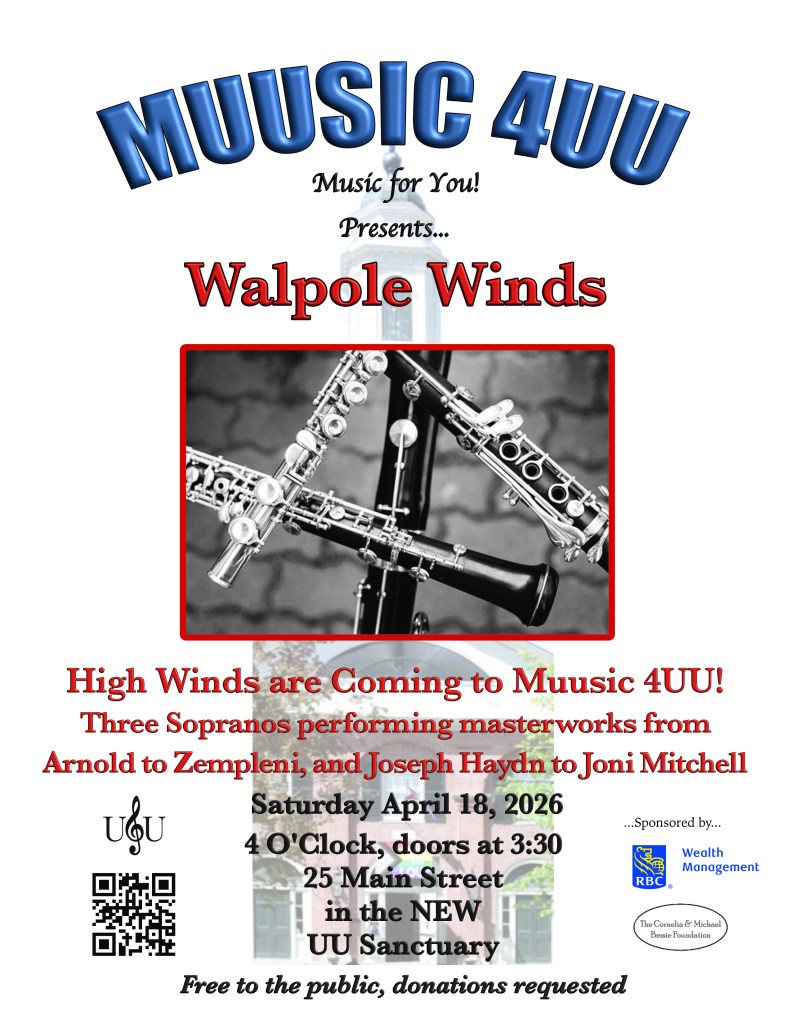
Julie Armstrong, flute Gary Nosenko, oboe Mary Seaver, clarinet
Three Voices from Many Sources
In recent years, musical ensembles have tended to fit the size of the times. Larger ensembles are difficult (and expensive) to establish, and composers have been composing for smaller forms. The problem often is fitting the music to the instrumentation at hand. Choosing from an ever-increasing and vast supply of resources requires deep searches into ancient collections — being a music librarian is no easy task. Arranging skill is also essential to morph parts from one set of instruments to another, often requiring doubling on the parts of the musicians — from B-flat clarinet to Bass clarinet, for instance. Or rewriting violin parts to suit wind instruments. Quoting from their communication with us:
Chamber works for flute, oboe, and clarinet are comparatively rare, mainly because the ensemble lacks a true bass instrument. Only two of the entries on our program — those by Arnold and Wailly — are originally scored for this combination. (Mary Seaver plays bass clarinet on a few of today’s pieces.)
In the case of Walpole Winds, sometimes a quartet and in this case a trio, all the skill needed is at hand. Their program, made up of an eclectic mix of popular, modern and baroque and classical periods, is soothing and rollicking by turns; sounds that are as familiar as the am radio many of us played incessantly during our younger years but always reflective of our cherished musical traditions. So let’s break it down more or less by period.
* * *
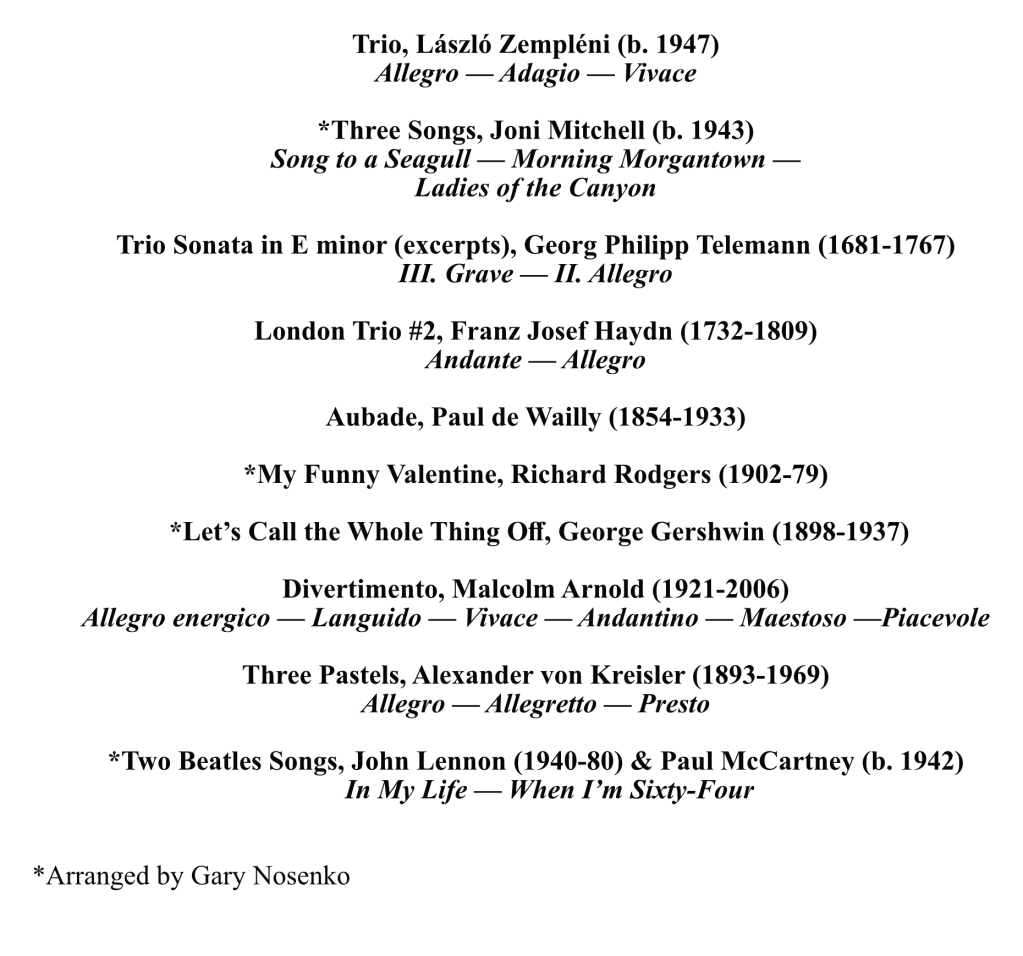
Program
Notes
Georg Philipp Telemann, [Trio Sonata] J. S. Bach’s contemporary, was both vastly more prolific (if you can imagine that) and more popular. He and Bach were friends, but Telemann tended to beat out Bach in getting the best gigs. Essentially self-taught in composition, he absorbed influences from many national traditions. He outlived Bach by seventeen years, well into the rococo period; the style of his late works infringes on Haydn and Mozart territory.
Speaking of Franz Josef Haydn, the London Trios (1794) were originally for two flutes and cello. Haydn gifted the work commemorating the Baron of Aston of Preston, an industrial town north of London. The scoring was unusual for its time, but the flute had recently become fashionable in England. After the flute fad faded, the trios practically disappeared from programs until the early twentieth century.
Moving forward a century, the French composer Paul de Wailly is perhaps known more for who he knew than for his own works. This is a bad break, because his music is beautiful. He worked in the spheres of Cesar Franck in his early years and Erik Satie into the twentieth century. Scored for Walpole’s instrumentation of flute, oboe and clarinet, Aubade is a lovely tone poem, giving us the stirring of leaves in the morning breeze, along with the raucous squawking of early birds. A passionate passage late in the work suggests a lovers’ lament at parting.
Alexander von Kreisler [Three Pastels] was born in Russia but moved to the United States soon after the Soviet Union was formed. He was educated in law at St. Petersburg, but evidently transferred over to the St. Petersburg Conservatory in 1916, studying with Glazunov and Tcherepnin. He emigrated to America in 1927 to work at Cincinatti Conservatory, chairing the opera and orchestral departments and broadcasting weekly CBS concerts, most of which are lost forever. The last two decades of his life was at the University of Texas, teaching orchestration and conducting, and it was during this time that he produced most of his works for small chamber ensembles.
Malcolm Arnold was one of the most prolific and successful 20th century British composers. He wrote not only symphonic, choral, and chamber music, but five ballets, two operas, many works for wind band, and over 100 film scores, including the Oscar-winning score for The Bridge Over the River Kwai. His six-movement Divertimento covers a wide range of moods, from lyrical to regal to giddy.
Hungarian composer, educator, percussionist, László Zempléni studied at the Franz Liszt Academy in Budapest and tympanist for the Hungarian State Opera Orchestra. His widely published works include books of transcriptions, arrangements and original music, scored for flexible instrumentation including winds, strings and percussion. The Trio is originally scored for three flutes and a perennial favorite of musicians and audiences. The opening Allegro is full of life and energy with all three flutes swirling around a folk-style dance. The evocative Adagio is hauntingly beautiful and leads straight into a rumbustious Vivace with its cross accented rhythms and sudden changes of dynamic.
Song to a Seagull, Morning Morgantown, and Ladies of the Canyon are early songs by Canadian singer-songwriter Joni Mitchell. Her music was a staple in any collection of 1960’s “urban folk” movement, but her style often combined elements of jazz, transcending the simple sounds of folk and protest into something much more complex. As Wikipedia reports, starting in the mid-1970s, she began recording with jazz musicians Wayne Shorter, Herbie Hancock, and Pat Metheny as well as Charles Mingus, who asked her to collaborate on his final recordings. She later turned to pop and electronic music and engaged in political protest. She was awarded the Grammy Lifetime Achievement Award in 2002.
The Beatles’ songs In My Life and When I’m Sixty-Four need no introduction, though it’s worth pointing out that the baroque-style interlude in the former was played for the studio recording by their producer, George Martin, on piano at a slow tempo, then dubbed in with the tape speeded up to sound like a harpsichord. In the latter, a song McCartney wrote as a teenager, the recording employs a trio of two standard B-flat clarinets and one bass clarinet.
My Funny Valentine (Rodgers and Hart) and Let’s Call the Whole Thing Off (George and Ira Gershwin) are two classics from what has been termed “The Great American Songbook,” those thousands of songs written in the first half of the 20th century for Broadway shows, Hollywood films, vaudeville theaters, and dance bands by the composers (mostly “ethnic” Americans: Jewish, Italian, Black, etc.) who churned out material for the music publishers in New York City’s “Tin Pan Alley.”
* * *
* * *
Lining It Out — Joy in the Collective Voice
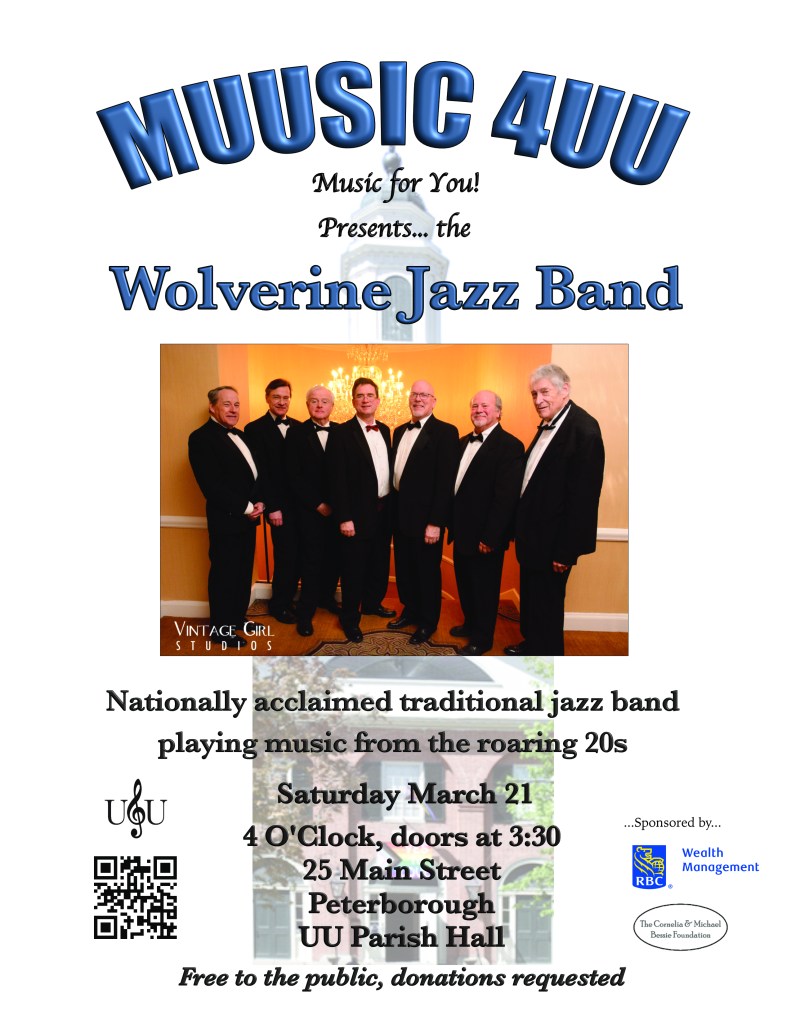
The one thing about Traditional Jazz that probably has always attracted me most is the pure, unadulterated joy in the music and the sharing thereof. Wolverine Jazz Band is a collection of musicians steeped in that tea of good times, joy and just plain fun.
When I was a 30-something dance band leader, John Clark was just a kid on the block with his clarinet in hand and a hopeful expression that wanted to be included in on the fun. He did Happy Feet Dance Orchestra proud when the band needed it most, and there starts his story with my bunch. I found out more about this now-storied band leader when I asked for some background on Wolverine Jazz Band.
I first got into swing by listening to some Benny Goodman records my father had. He got me a New Black Eagles record when I started to play clarinet, but it took me quite a while to warm up to that style. My natural geeky inclination took me to the library when I was 12 or 13 to learn about Jazz and I found lots of information (and recordings) of the early New Orleans players like Dodds, Noone and Bechet and started my listening life. By the time I got to college I had amassed a pretty good record collection and was fairly fluent in my traditional jazz vocabulary. I would also be remiss in not crediting Ray Smith and his great radio show “The Jazz Decades” for a significant part of my education, culminating in my playing with the last version of his Paramount Jazz Band .
To translate that quote for the curious, Jimmy Noone, Johnny Dodds and Sidney Bechet are to jazz what Beethoven, Mozart and Brahms are to classical orchestral music, except more on the fly. Traditional Jazz (aka “Dixieland” which is now considered pejorative in most circles) is so quintessentially American that we hardly think of how universal it has become. Yet it is the perfect example of a social interaction. Community is baked into the performance practice of the trad. band — the very act of playing the ancient form of call and response, so beautifully loaned to us by its originators, is a way of sharing ideas. Call and response developed into full -chorus solos, giving each player their voice.
Without an audience, the whole thing falls rather short of these democratic ideals. Jam sessions, so popular in trad. jazz circles, are social gatherings where the best ideas happen. Just the band playing is a … rehearsal. And a rehearsal is basically just the outline.
The alumni of Wolverine Jazz Band are now old-timers. Many dating back to the glory days of the New Black Eagles (who, by the way are still in their glory days). Jimmy Mazzy on banjo is the Plato of Minstrelsy, Jeff Hughes has been blowing his horn since before the walls came down. Well, ok, none of this is true, but given that trad. jazz has been through several revivals since the 1950’s, those of us who can remember those days have something to say. And that something is a huge body of music that dates back to the very beginnings of the American Songbook, plus the entire catalog of blues and ragtime. Throw in some Tin Pan Alley and a bunch of novelty tunes we’ve all but forgotten and and you have something to say. Then, add a few fresh faces like Dave Didriksen on drums (say that fast three times), John Clark on clarinet and Ross Petot on piano you have new life.
The 1920’s were kind of a special time. Lots of good music and fun times if you forget about the rank stupidity of an administration that more or less created a crime wave by trying to prevent people from drinking, or the spectre of fascism looming on the horizon. I say these things advisedly and under supervision.
So in the spirit of letting the music speak for itself, I asked John to help me out with some definitions of the entire vocabulary of distinctive slang terms that the 1920’s engendered. Here they are; help me out if John missed the mark.
Hoosegow — A traditional Chinese houseboat
Big cheese — Only a happy memory for me unless I double up on my cholesterol meds.
Flapper — I should think of something in the 20’s, but the only image I have is of the dingus that floats in the toilet tank. Probably has some musical association, come to think of it.
Palooka — A Polish expression meaning “productive sneeze”
Hot Tomato — Goes with “Flapper,” although it’s hard to combine with the toilet metaphor.
Wise guy — Visited Bethlehem with two friends from the old neighborhood.
Hey, enjoy the music!
Play that thing!