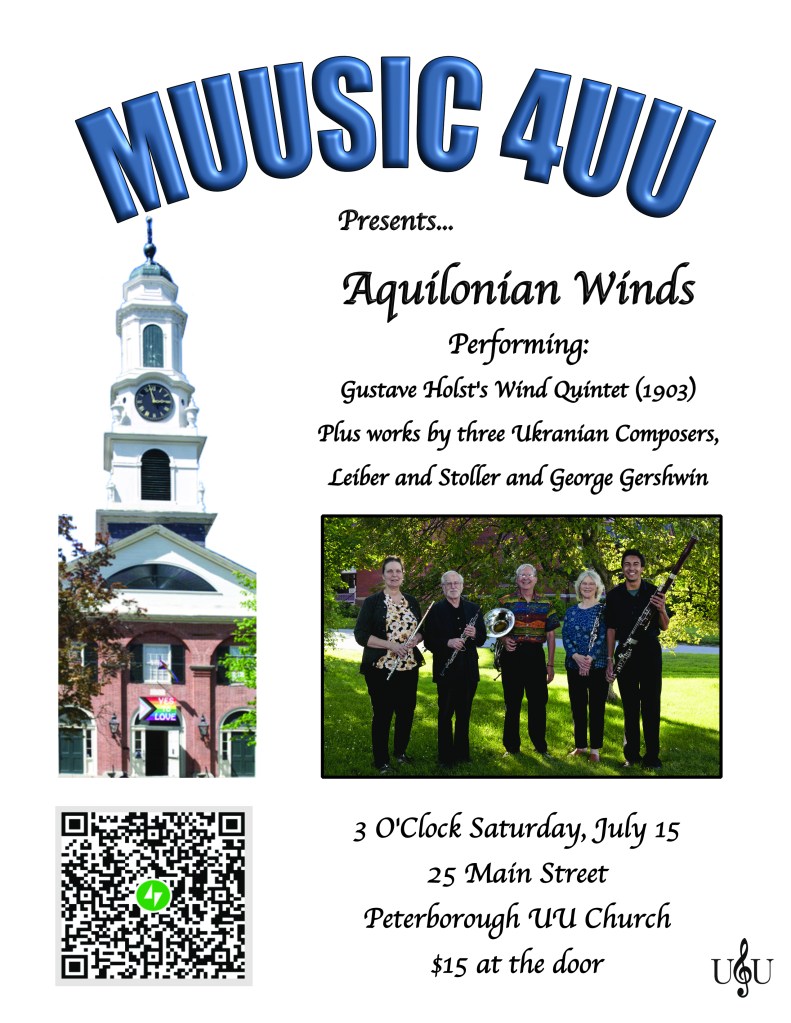
SATURDAY, JULY 15
AQUILONIAN WINDS
* * *
Our Inaugural Season, March 25- July 15, 2023
Welcome to the Muusic 4UU Blogsite! You got here because you found the QR code on one of our posters or postcards and scanned it.
Lucky you! Because here you will find all the information you need to know (or ever hope to!) about all our performances that we present throughout a season. We will add all the program and performer information for each concert as it comes up, so you may have to scroll down a bit to find the one you are currently attending. But just think, almost no paper waste, low printing costs, and information that can be archived and still available for all time … we’re green, baby!
WHO ARE WE?
We are all members of the group of musicians who live and work in the Peterborough, NH area; some of whom attend the Peterborough Unitarian Universalist Church (hence the proliferation of UU in our logo!). Coming out of the pandemic and seeing an opportunity to bring back live music, we’re starting a series of concerts to help bring more music and joy into the world. Our performers are professionals — local and regional and our groove is uh, shall we say diverse? From folk and jazz, to blues and country, to classical and opera — our plan is to keep it interesting and representative of who we are in our musical souls up here in Peterborough, New Hampshire.
SCHEDULE, Spring and Summer 2023
Saturday, March 25, Grove Street
Saturday, April 22, Folk Soul Band
Sunday, May 21, Mill City Rags
Saturday, June 17, Wendy Keith and Friends
Saturday, July 15, Aquilonian Winds
All concerts are held in the beautiful, historic sanctuary of the Peterborough Unitarian Universalist Church, 25 Main St., Peterborough, NH
Concert times are 3:00 pm.
* * *
SATURDAY, JULY 15
AQUILONIAN WINDS
JULIE ARMSTRONG, flute, began flute lessons with Holly Sanders at ConVal High School, then studied at Keene State College with Bonnie Insull and Eric Stumacher, and later with Alex Ogle at the Brattleboro Music Center. She taught beginning and middle school band for the Fall Mountain School District until her retirement. She currently performs with the Keene Chamber Orchestra, Fireside Winds, River Mill Flutes, and the annual Keene Lions Club musical.
GARY NOSENKO, oboe, began playing oboe in public school in northern New Jersey and studied privately with Juilliard oboe professor Melvin Kaplan. He has played in many chamber ensembles, orchestras, and theater productions in the tristate region. He is also a composer, arranger, program annotator, and essayist.
MARY SEAVER, clarinet, is a long-time musician in the Monadnock area and around New England. She studied with Richard Sanders at ConVal High School, with William Wrzesien, and at UMass with Michael Sussmann and David Martins. She has performed with Valley Light Opera and Raylynmor Opera. Currently she enjoys playing with the Keene Chamber Orchestra, Windham Philharmonic, and Fireside Winds.
DAVID MILLER, horn, studied at the Navy School of Music and Keene State College. He played in the Army Band and has performed with the Keene Chamber Orchestra, Keene Chorale, Monadnock Chorus, Lions Club Productions, Raylynmor Opera, Windham Philharmonic, and other area musical organizations.
NATHANIEL BRIDGES, bassoon, is a New Hampshire native and recent KSC graduate in music composition. He plays clarinet and saxophone as well as bassoon, and has performed with the Keene Chamber Orchestra and Keene Jazz Orchestra.
Wind Quintet, with its uniquely varied array of instruments, is a long-established chamber music combination with roots in the late 18th century. Distinguished composers since then have written music for it. Today there are many permanently established quintets (though not so much in this region). The Aquilonian Winds hope to present a wide variety of both older and contemporary compositions in local performances.
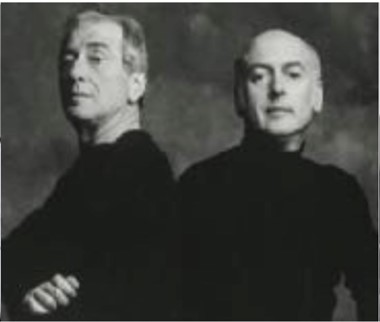
Nathaniel Bridges
PROGRAM
Five Pastorales Charles Koechlin (1867-1950)
Ukraine
Prélude (Op. 2) Viktor Kosenko (1896-1938) Scherzo (Op. 34 No. 14) Reinhold Glière (1875-1956) Elegie (Op. 41 No. 3) Mykola Lysenko (1842-1912)
Wind Quintet in A-flat Major Gustav Holst (1874-1934)
Allegro moderato (un poco rubato)
Adagio
Minuet (in canon)
Air and variations
INTERMISSION
Our Town: Three Excerpts from the Film Score Aaron Copland (1900-1990)
The Story of Our Town
Conversation at the Soda Fountain
The Resting-place on the Hill
They Can’t Take That Away From Me George Gershwin (1898-1937) Ira Gershwin (1896-1983)
Love Potion #9 Jerry Leiber (1933-2011) Mike Stoller (b. 1933)
* * *
PROGRAM NOTES
FIVE PASTORALES
by Charles Koechlin
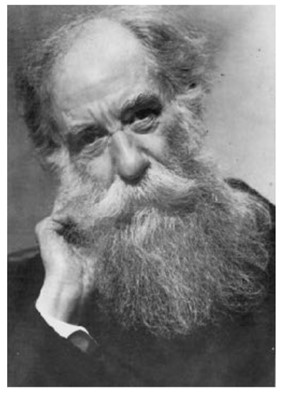
Opus 77 #3, 4, 5, 6, and 9
Charles Koechlin (1867-1950) was an enormously prolific French composer. His best-known works are several orchestral tone poems based on Kipling’s Jungle Book, and the Seven Stars Symphony (a tribute to such Hollywood movie stars of the silent era as Charlie Chaplin, Douglas Fairbanks, Greta Garbo, and Mary Pickford). He orchestrated Fauré’s suite Pelléas et Mélisande, Debussy’s ballet Khamma, and Cole Porter’s ballet Within the Quota. His musical idiom is hard to describe: a blend of impressionism, neoclassicism, and modernist techniques, all of it sounding distinctively French.
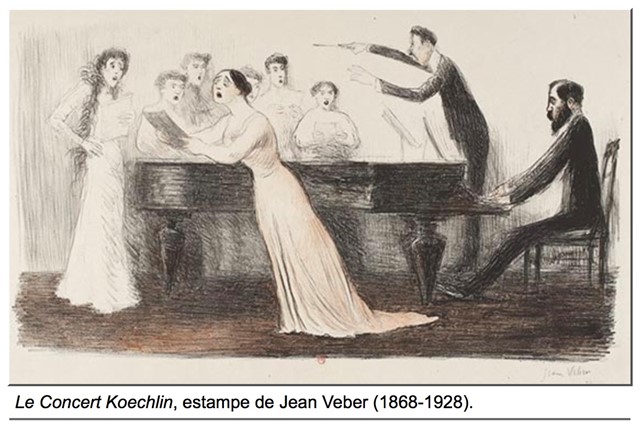
Opus 77 (from a catalogue of well over 200 works) is a group of twelve Pastorales for piano. Most are very short; these are some of the shortest. There’s an endearing modesty, a lack of pretentiousness, about these pieces, as well as many others by Koechlin. They aim to please, not impress. That does not imply lack of craft; Koechlin was skillful and sophisticated (which is why such heavy hitters as Debussy and Porter sought his services). His contrapuntal writing is especially noteworthy; Pastorales V and VI, brief as they are, make good examples.
UKRAINE
Three Works by Ukrainian Composers
Viktor Kosenko: Prélude (Op. 2)
Reinhold Glière: Scherzo (Op. 34 No. 14)
Mykola Lysenko: Élégie (Op. 41 No. 3)
The Russian invasion of Ukraine has focused the world’s attention on that beleaguered nation. For musicians and music lovers generally it has spurred an interest in Ukrainian composers, most of whom are little known beyond its borders.
What makes a composer Ukrainian? Place of birth? Upbringing? Musical training? Residency? Use of Ukrainian folk materials? The matter is complicated by the centuries-long relationship — cultural, political, geographical — between Ukraine and Russia. The careers of these three composers are cases in point.
Viktor Kosenko (1896-1938) was born in Saint Petersburg. He showed early talent in music and developed into a virtuoso pianist. In 1898 his family moved to Warsaw. At the start of World War I they moved back to Saint Petersburg, where he entered the Conservatory. After graduation in 1918 he moved to the Ukrainian town of Zhytomyr, where his family had resettled, and became director of its music school. His decade there was fruitful; he composed prolifically, fell in love, got married, and began his solo piano career. He became active in contemporary music circles in Moscow (this was in the early heady days of the Revolution) and toured as a recitalist and chamber musician throughout the USSR, giving over a hundred free concerts in Ukraine. His programs there included works by Ukrainian composers. When Stalin came to power, “creative conflicts” with the regime prompted Kosenko to move to Kyiv, where he taught first at the Mykola Lysenko Institute of Music and later at the Kyiv Conservatory. He eventually re-established himself in Soviet music circles, composed works in orthodox Socialist Realist style, and arranged Ukrainian and Soviet folk songs (the latter seems oxymoronic) for publication. He lived most of his life in Zhytomyr, largely impoverished like the rest of the populace under Soviet incompetence. The government forced him to share his house with other families. He opened it to homeless people and gave them food and money. Finally he was granted an apartment in Kyiv and honored for his services to Ukrainian music with the Order of the Red Banner of Labour, presented by the top Communist official in Ukraine, Nikita Khrushchev.
Kosenko’s music is in the tradition of late Russian Romanticism. There are about 250 compositions, of which more than 100 are for piano; the rest include chamber, orchestra, and choral works. An admired teacher, he wrote lots of music for children to study and play. By most standards he was successful in all his several careers. Much good did it do him. His health ruined, he died at age 42. This brief somber prelude is an early work.
Reinhold Glière (1875-1956) is the only one of these three composers with an international reputation. He was born in Kyiv, studied at its music school, and then attended Moscow Conservatory, where his starry array of teachers included Taneyev, Ippolitov-Ivanov, and Arensky. He started on a teaching career; one of his students was 11-year-old Sergei Prokofiev. In 1913 he became director of the Kyiv Conservatory, where he taught Vladimir Dukelsky, better known to Americans as Broadway composer Vernon Duke. His own first big hit, the ballet The Red Poppy (1927), was “the first Soviet ballet on a revolutionary subject.” Russian Sailors Dance is a favorite on pops concerts. Music from two other ballets, The Comedians and The Bronze Horseman, also became popular. His vast 3rd Symphony, the programmatic Ilya Murometz, is regarded by some as his masterpiece. A generation older than Kosenko, he made the transition smoothly from Tsarist to Soviet Russia and never got into trouble with the authorities for embracing “bourgeois formalism.” Instead they piled honors on him.
Glière was prolific. Like Kosenko, he wrote much music for children. This Scherzo is from such a collection, titled for Western consumption 24 Pièces Caractéristiques pour la Jeunesse, Op. 34. Characteristic perhaps, but not in its 5/4 time signature. The structure is ABA, with a slower legato middle section sandwiched between the rapid staccato ones, the last an abbreviated version of the first.
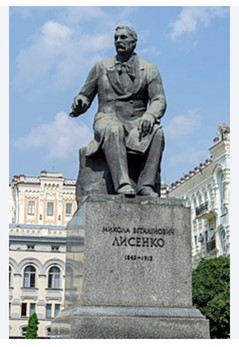
Mykola Lysenko (1842-1912) is considered the “father of Ukrainian music.” He drew on Ukrainian folk sources, promoted the Ukrainian language, and set texts by Ukrainian writers. His 1885 choral setting of a patriotic poem became known internationally as Prayer for Ukraine. Coming from a wealthy cultured family, he began music studies early. He attended high school in Kharkiv and university in Kyiv, and later studied at the Leipzig Conservatory with Carl Reinicke. Returning to Kyiv, he began composing in earnest. From 1874 to 1876 he studied orchestration with Rimsky-Korsakov in Saint Petersburg. After that he settled permanently in Kyiv. To an even greater extent than Kosenko and Glière he was a Ukrainian ethnomusicologist; like them, he was prolific in all the traditional genres.
From Wikipedia:
By the late 1870s, Lysenko was recognized as a leading figure in Ukrainian music. As a Ukrainian composer living in a Russian-controlled state he endured continued difficulties from the government. His relationship with the RMS gradually deteriorated, until he was completely ignored. Unlike his Russian colleagues, Lysenko received no state support, and sometimes active resistance from Russian officials. He was repeatedly monitored by the government and often attacked in the local press, because his activities in support of Ukrainian culture made him suspicious to the political officials – in particular his frequent meetings with other Ukrainian patriots, and later, his support of the 1905 revolution and heading of the Ukrainian Club.He was jailed for his stance on the revolution in 1907.
The Ems Ukaz decree of 1876 that banned use of the Ukrainian language in print was one of the obstacles for Lysenko; he had to publish some of his scores abroad, while performances of his music had to be authorized by the imperial censor. For his opera libretti Lysenko insisted on using only Ukrainian. He was so intent on promoting and elevating the Ukrainian culture that he didn’t allow his opera Taras Bulba to be translated – he maintained that it was too ambitious to be staged in Ukrainian opera houses. Tchaikovsky was impressed by the opera and wanted to stage the work in Moscow. Lysenko’s insistence on it being performed in Ukrainian, not Russian, prevented the performance from taking place in Moscow.
What makes a composer Ukrainian? Three composers, three answers.
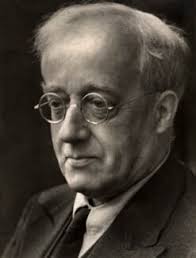
WIND QUINTET IN A-FLAT MAJOR
by Gustav Holst
I. Allegro moderato (un poco rubato) II. Adagio III. Minuet (in canon) IV. Air and variations
The 1903 Wind Quintet is a fluent and tuneful piece from what his daughter called his “long and painful” apprenticeship. The origins of this work are surrounded in mystery, as is its survival. For many years the whereabouts of the manuscript was unknown but in 1978 it surfaced in the Surrey History Centre. The work was first published in 1983 but in a truncated version; 44 bars were cut from the first movement and 32 from the second.
From the Boosey & Hawkes website
Gustav Holst is best known for his monumental orchestral suite The Planets, but in many ways that work is not representative. In fact, hardly any of his works could be called representative, because his styles and interests were so diverse. Commentators note the influence of Brahms in the first two movements of the Wind Quintet, of baroque counterpoint in the ingenious canon-minuet and its whirlwind trio, and of English folksong in the theme and variations finale.
Many of those commentators condescend to the work as “lightweight,” partly because it comes so early in the composer’s career. Those first two movements, however, are certainly substantial, and there’s nothing wrong with lightness in a minuet or finale; just ask, say, Mozart or Haydn, to pick a couple of names at random. Holst’s Quintet is not only a rare find, but a significant addition to the wind repertory.
A more recent edition than the 1983 one restores the cuts described on the B&H website, but most performances, including this one, use the edited version.
OUR TOWN
Three Excerpts from the Film Score
by Aaron Copland
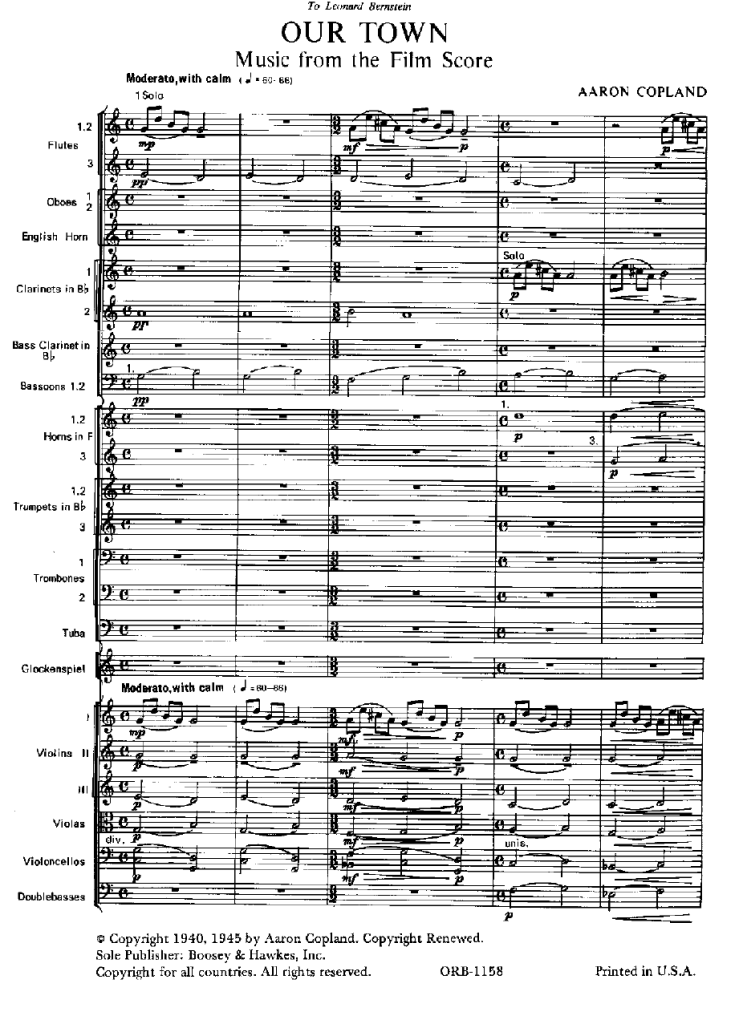
The Story of Our Town Conversation at the Soda Fountain The Resting-place on the Hill
1. The Music
“For the film version, they were counting on the music to translate the transcendental aspects of the story. I tried for clean and clear sounds and in general used straight-forward harmonies and rhythms that would project the serenity and sense of security of the story.” — Aaron Copland
In Copland’s own piano version of these three excerpts, there’s practically nothing on the page: brief motto tunes based on scales and triads, common chords standing in ranks like soldiers, lots of half- and whole-notes (wind players call them “footballs”), not much else.
The lovely tune in the Resting-place excerpt is a Gymnopedie, a term coined by the eccentric French composer Erik Satie for the three brief piano pieces by which he is best known. You’ve heard them. It’s a slow waltz with a long-breathed melody; the accompaniment is a bass note on the downbeat of each bar, and a right-hand chord on the second beat, held through the third.
The typical film score in the “golden age” of the Hollywood studios was BIG: very full orchestra, hyper-romantic, colorful, noisy, Viennese-y. Think Max Steiner or Erich Korngold (and their pre-eminent modern successor, John Williams). Wonderful stuff. But not for Copland, trained in France by the fastidious Nadia Boulanger, the 20th century’s greatest teacher of musical composition. He wrote only a few scores for feature films, but they were “prestige” projects including The Heiress (based on Henry James), Of Mice and Men and The Red Pony (both by John Steinbeck), and Thornton Wilder’s Our Town.
2. The Composer
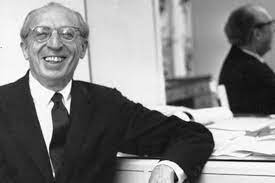
Copland was the most successful American “classical” composer of the last century. He mastered all the standard forms: keyboard, chamber, orchestral, choral, dance, song, and opera. Early in his career he experimented with jazz and “avant-garde” idioms, but as the Great Depression descended on the United States he felt the need to speak more directly to American audiences (to be, in today’s unfortunate term, more “accessible”) by simplifying his style and incorporating various folk traditions: cowboy songs, Southern folk songs, New England hymns. For the score he wrote to Martha Graham’s ballet Appalachian Spring he unearthed the Shaker hymn Simple Gifts, which owes its enduring popularity to him. He is often credited with inventing the “American Sound” in classical music.
So in 1940 he was a logical choice to compose the music for the film of Our Town, that most quintessentially American of plays, celebrating the simple verities of small-town life. Wilder wrote the play at the MacDowell Colony in Peterborough, New Hampshire, which he took as the model for his fictional Grovers Corners. Copland had also worked at MacDowell, and shared Wilder’s artistic values. It’s hard to imagine music better matched to its subject.
THEY CAN’T TAKE THAT AWAY FROM ME
by George Gershwin
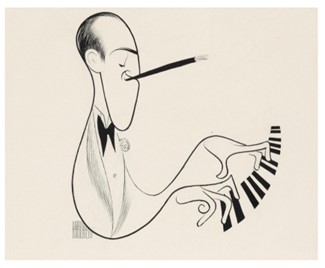
Composer George Gershwin and his lyricist brother Ira need no introduction.
They Can’t Take That Away From Me was written in 1937, the last year of George’s life, for the Fred Astaire/Ginger Rogers movie Shall We Dance. It appears in a sequence where the two characters, who were forced to marry as part of a publicity stunt and then fell in love with each other before further complications ensue, are about to part. Astaire and Rogers each said later in life that the song was one of their favorites.
This arrangement includes the “verse” (a traditional introductory section) before the “chorus” (the familiar tune). Such verses were usually text-driven and melodically undistinguished. Not Gershwin’s.
Our romance won't end on a sorrowful note,
Though by tomorrow you're gone;
The song is ended, but as the songwriter wrote,
The melody lingers on.
They may take you from me I'll miss your fond caress.
But thought they take you from me, I'll still possess ...

The way you wear your hat,
They way you sip your tea,
The memory of all that,
No, no, they can't take that away from me.

The way your smile just beams,
The way you sing off key
The way you haunt my dreams,
No no, they can't take that away from me.

We may never, never meet again,
On the bumpy road to love.
Still I'll always, always keep the memory of ...

The way you hold your knife,
The way we danced till three,
The way you changed my life,
No, no, they can't take that away from me,
No, they can't take that away from me.
LOVE POTION #9
by Jerry Leiber and Mike Stoller
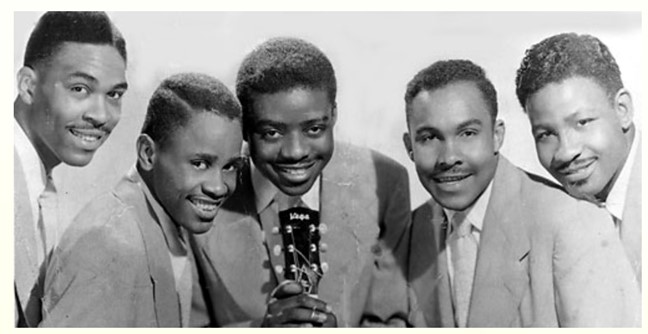
Love Potion #9 was recorded in 1959 by a nearly forgotten male quintet, The Clovers, and later “covered” by better-known artists. It’s comical, but in a minor key. Originally a doo-wop rocker, here it’s treated as a slow blues, which perhaps better reveals its melodic and harmonic distinction. The song was used on the soundtrack of several hit movies and even engendered one (so titled) which incorporates details from the lyrics and expands on the story.
I took my troubles down to Madame Ruth,
You know that gypsy with the gold-capped tooth,
She's got a pad down on Thirty-Fourth and Vine,
Sellin' little bottles of Love Potion Number Nine.

I told her that I was a flop with chicks,
I've been this way since 1956.
She looked at my palm and she made a magic sign,
She said, “What you need is Love Potion Number Nine.”

She bent down and turned around and gave me a wink,
She said, “I'm gonna make it up right here in the sink.”
It smelled like turpentine, it looked like India ink,
I held my nose, I closed my eyes, I took a drink.

I didn't know if it was day or night,
I started kissin' everything in sight,
But when I kissed a cop down on Thirty-Fourth and Vine,
He broke my little bottle of Love Potion Number Nine.
* * *
SATURDAY, JUNE 17
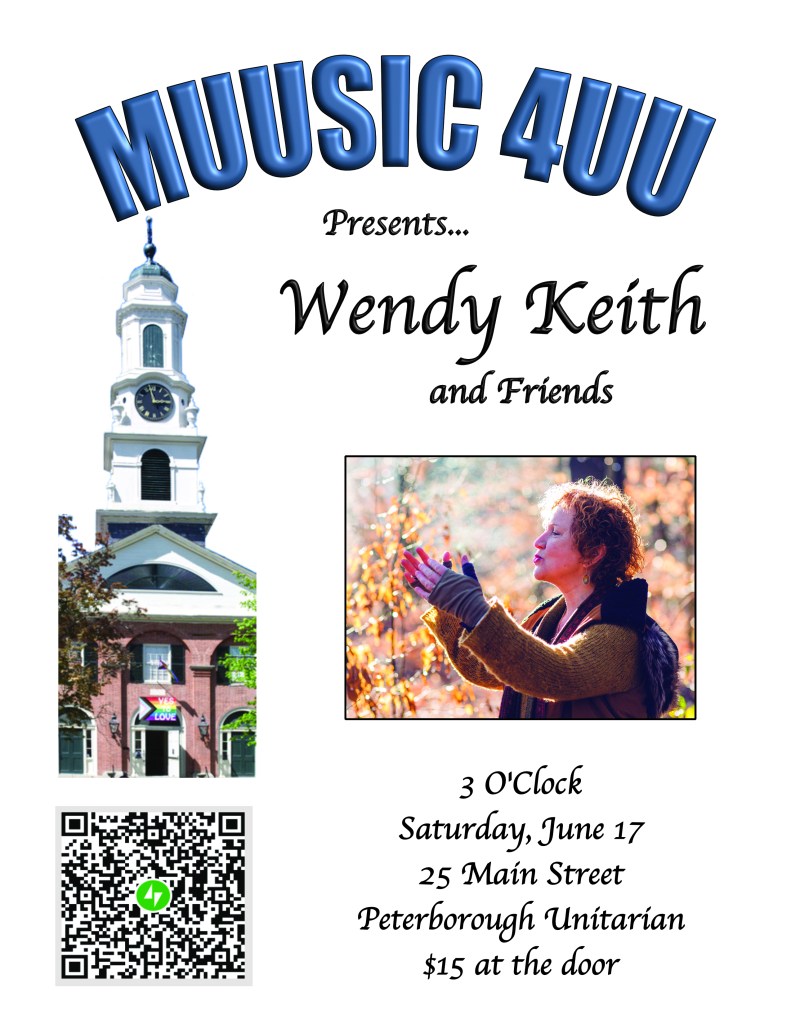
WENDY KEITH and FRIENDS
“What a voice! Hubba Hubba!” This accolade for Wendy Keith was spoken by touring singer-songwriter Vance Gilbert. Another musician, the tough and tender voiced troubadour Greg Brown, says Wendy “sounds like an angel.” And indeed, there is such a rich quality to her singing, at once lyrical and plummy, something elemental and basic like when you know the marinara is perfect or the freshly sanded walnut burl tabletop is ready for linseed oil.
Here’s her official resume: Wendy Keith is a singer songwriter who has been playing guitar in the Monadnock Region for many years at venues including The Folkway, The Colonial Theatre and Peterborough Players. She has recorded four LPs and the most recent, It’s About Time was released to a sell-out crowd early in 2020. Wendy is a two-time ASCAP award winning songwriter.
But a resume is simply the sum of all the parts; the shiny lacquer over the solid foundation of her total output of music. And this, whether interpreted, reinterpreted, or most essential of all — her own story — feels like … home.
And home is what you feel when you listen to her music.
A tune like “Ain’t Nobody’s Fault But My Own,” originally recorded in 1927 by Blind Willie Johnson and since covered by scads of musicians from Doc Watson to Jerry Garcia, becomes in Wendy’s hands a soulful anthem of regret and self-reckoning that cries The Blues.
Or as when she considers the messy joys of familial interconnectedness in one of her early tunes “Junque Drawer;” a song about that catch-all repository of all the odds and ends, tchotchke and detritus of one’s life that you can’t live without. A place where you search for bits and pieces of who you are, your identity in minutiae. Just like family, right?
And from her most recent album, It’s About Time, released in 2020 just before the pandemic, “The Heart is Not a Bone” is the kind of nuanced, mature piece that can come about only after suffering some bruising and buffing in life. The heart is the soft, beating center of your being, the most centered part of self, the home base of our existence.
In her NHPR interview of November 2022, Ms. Keith spoke of one song that particularly resonates with her: “Stuff that Works” by Guy Clark. She said:
“It just really boils down to what works, what doesn’t work. Don’t waste time on what doesn’t work, focus on the stuff that does. You know, ‘the stuff you reach out for when you fall.’”
In quoting the lyrics, she may have been giving an eloquent plug for Clark’s song, but she is apparently speaking her own truth for who she is as a person and an artist now.
Ms. Keith has also assembled a new group of players and wrote to introduce them to us:
Stephanie Hurley is a versatile vocalist in many genres of music. She has sung since childhood in choruses and choirs performing a cappella, musical theater, jazz and swing, pop, folk, and classical music. She holds degrees in Vocal Performance and Music History. Most recently, she has performed with the Bedford Big Band, singing swing music from the Great American Songbook.
Bob Bolt has been playing bass since 1970, when he joined a Sha-na-na tribute band called “Grease.” He went to play in several years in rock bands near Boston. In 1978, he met Stephanie Hurley, who changed his musical direction to jazz standards. Bob & Steph formed various bands that performed a variety of popular music, including disco.
More recently, he’s played covers and original music in Monadnock regional bands: Ivy LeVine and Chum, Bare Bones, the Slyders, and Dragon Bone Jam. He recently expanded his instrumental range to include a Ned Steinberger electric upright bass. His bass heroes include James Jamerson, John Entwhistle, and Paul McCartney.
Jonas Taub is a guitarist and singer with over 50 years of solo and ensemble performing and recording experience. His guitar mastery and singing repertoire encompass styles ranging from bluegrass to blues, jazz, folk and more. A harmony singer since childhood, Jonas also enjoys adding vocal harmonies and guitar parts to enhance the song. Jonas is currently a member of the band Off The Cuff, and performs with Wendy Keith and others .
This promises to be the best of the best for the Muusic 4UU series. Their rich instrumentation and three part harmonies will grace selections of original, Americana, gospel and jazz in a diverse concert with something for everyone.
* * *
SUNDAY, MAY 21
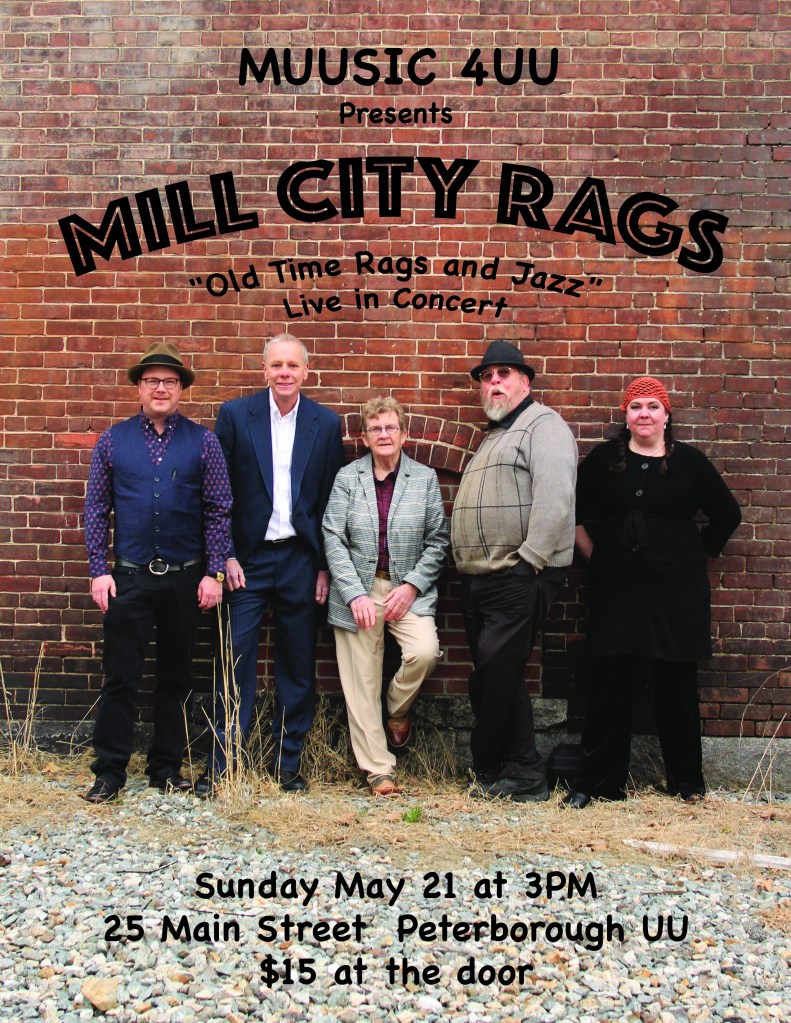
MILL CITY RAGS
If you’re looking for the origins of American music, you couldn’t do much better than Ragtime and Traditional Jazz. And Jimmy Otis, the leader of Mill City Rags, reports this understanding when he says
My piano teacher introduced me to Scott Joplin’s The Entertainer and I loved it. Ragtime was this strange wonderful music-a fusion of European and African American elements.
Jimmy is a musician who came to his art somewhat later than the so-called “norm” of starting young and playing through early school years. He started playing drums in his late teens and discovered the piano at age 20. It probably had been there in the parlor all along, but Jimmy was into wrestling at the time so he might not have noticed it. Either way, once he got going there was no turning back. In college he studied theory and kept taking lessons and despite being momentarily sidelined by the accordion, he stayed the course.
And it’s obvious from his skillfully accurate technique and authentic interpretation of the music, as well as his ability to tackle a variety of styles in the genre of early jazz. I’ve heard some darned good Duke Ellington along with Scott Joplin and Louis Armstrong coming from this band with Jimmy backing it all up on the keyboard.
I personally was involved with early jazz in the Boston area since the mid-80’s, and Mill City Rags is a relative newcomer to the genre — a big relief to aficionados who have been seening the graying of audiences for a couple decades. I asked him how he pulled this group together. His answer was plainspoken:
Mill City Rags began with me saying I was going to start a Ragtime band and that was it! I had played in rock bands, but wanted to swing and play this music so I just did it.
Well, that’s making a decision.
From there it was a matter of assembling the players. An important thing to know about any jazz ensemble is that this style of music, perhaps more than any other ensemble of any genre, uses printed music as a starting point and develops a sound based on improvisation. This is above and beyond the synthesis of individual instruments and personalities — that sometimes uncanny telepathy that exists among musicians. Improv requires lightning fast decisions that comes from knowing the tune, the style and cues from other musicians. Plus the secret sauce: having good musical ideas.
The players in Mill City have those elements at play: piano by Jimmy and his bassist Rick Posch with JoAnn Gerde on drums hold the whole thing together. What is called the front line with Nicole Edgecomb on trumpet and Dan Walker on trombone provide the magic, setting the mood to bring the audience directly into a roaring 20’s speakeasy for some good times.
Hearing the origins of American popular music is a balm to the ears, heart and soul. I’m so glad that it’s still going, still playing, still making some heat in a chilly world.
* * *
SATURDAY, APRIL 22
FOLKSOUL BAND
“Laissez les bon temps rouler!”
This is a band that will have you dancing in the aisles. You might think that’s a bit sketchy for a church, but hey — this is a UU Church. “Sanctuary” means all kinds of things, and dance is one of the best ways to get in the spirit.
Folksoul Band is something of an institution around these parts. The sounds of New Orleans — Cajun, Soul, R&B — may not seem to be a great fit for chilly New Hampshire, but their sizeable following says otherwise. Don’t we all need a little heat (warmth) and heat (rhythm) now and then?
We took the initiative to ask leader Fred Simmons a few questions about his motives and wherewithal concerning Folksoul, and here’s what he said:
Folksoul is such an interesting name for a band. Can you tell us something about the music and your approach?
[Folksoul is] dance music, with a natural and organic acoustic balance that does not rely on volume to reach people’s hearts and souls. No other band sounds quite like this one, or makes music exactly like it. It is high-spirited music generated by the musicians and the instruments themselves, and it’s an interesting assortment on both counts!
So, Folk and Soul. I get it. Tell me about yourself. What is your background in music?
I have been playing music ever since college, and have played for people all over the country, from Alaska to Maine, and have learned a lot about music and people and myself in the process.
Nothing like being in front of an audience to learn to read people, right? What got you started in this style of music?
When Leslie and I first arrived in San Francisco from New York in 1976 we began playing on Fisherman’s Wharf and began a style of playing American roots music. In 2007 we began to focus especially on New Orleans musical culture, and called our new band the Folksoul Band.
What is it about this style of music that moves you? Can you put that drive into words?
My experiences have taught me that New Orleans culture, via artists like Louis Armstrong and Fats Domino, funneled through artists like Hank Williams and Elvis Presley, is the seed for a unifying American culture. We are an exponent of that unifying American culture, that expresses the marriage of African American and European American cultures.
Tell me just a little bit about your bandmates. How did you meet them and how do you interact as members of the ensemble.
Leslie Vogel and I have been married and also musical partners for all these many years since college. We have learned to play together in various forms, and we do many things with our music.
Tara Greenblatt is an extraordinarily creative musician with an expressive voice and also a great percussionist, who also has her own band as a vehicle for her great songwriting. We are happy that we can share in this mission of bringing this music into the world.
We are glad to have Ramsay Thomas joining us on stand-up bass for the last 5 years, providing us with the steady solid bass rhythm that our music requires.
What brought you to New Hampshire, and is there anything else interesting you want to say about your lives here?
We moved to NH in 1986. By then we had two children and our original band finally gave up the ghost in Anchorage AK, so we moved back east, to be closer to our children’s grandparents. We bought land in greenfield NH, cleared it and built a log house, where we still live today.
* * *
GROVE STREET TRIO
MARCH 25, 2023
Grove Street is a trio of local Monadnock area musicians, Chaz Bealieu (flute), Eric Blackmer (guitar) and David Duhon (cello). They have just released their first CD album called THE TUNES, The Whole Tunes and nothing but the tunes- The Tunes for short. Grove Street is an unlikely group of individuals to be making such beautiful music together. Chaz was an English teacher, now a cook, Eric was a pro audio sales and studio builder (retired), and David was professional bridge player and now is an organic farmer. These disparate individuals brought together by a shared love of music have forged a strong musical bond. Chaz and Eric have been playing together locally for over 20 years in groups with various other musicians. David joined up more recently…
THE TUNES is an eclectic collection of instrumental music drawn from over 4 centuries, focusing heavily on the works of four composers, Turlough O’Carolan (1670 – 1738), a blind itinerant Irish harpist who wrote hundreds of songs mostly named for patrons, Bob McQuillen (1923- 2014), a legendary local piano player and beloved shop teacher who wrote hundreds of songs, mostly named for people he knew. Then there is Tom Febonio, a living composer who happens to be an old college mate of our flutist, Chaz. Tom has a remarkable body of compositions that range from whistle tunes to full blown classical music. The fourth composer featured on the CD and in today’s concert is Jessica Walsh who compiled 2 books of Celtic Music for Flute which we have been playing from for years. Many of the songs in her books include variations which we use and they are brilliant. When we got to making the Tunes we found that we included two of her songs.
The music that Grove Street performs is a unique blend that doesn’t fit into any one genre. You might call it Celtic music, or folk but that would not tell the whole story. Grove Street likes to describe what they do as chamber music. One thing we can be sure of is that it is beautiful music.
* * *

